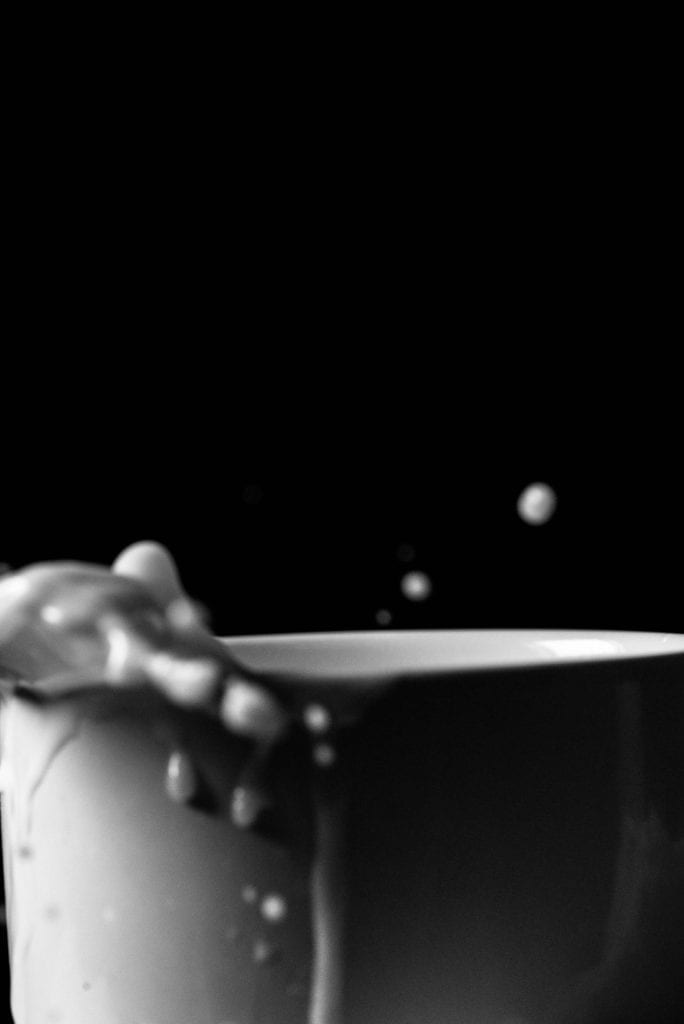
Motion Blur.
For this project we are looking at motion blur and long exposures on photos and how they reflect and create different moods on a photo. We will be looking at the sense of time and how that plays a part in the photo that I capture.
Michael Wesley
Michael Wesley is an Australian photographer known for his long-exposure work that captures the passage of time. He uses extended exposures—sometimes lasting days or even months—to create images that reveal subtle changes in light, movement, and atmosphere. One of his most famous projects involved photographing the Berlin Cathedral over two and a half years , creating images that show how the space changes over time. His work reflects on time, memory, and transformation. Here below are some of his examples.


In these photos we can see that it gives the sense of slow time in which these building are taking years too build but in the photo we can clearly see the before beginning and after of the photos with abstract buildings.
Shoot one.


All of these photos where taken in the Ferans hall. With the first picture I liked the way that the arching ceilings contradicted with the chair in the middle and that the swirling pattern contrast with the dark atmosphere similar to the rest. The shutter speed time was at 5.0 seconds which I feel was just right to see the chair and still see the good lighting.
My favourite photo from this selection was the fifth photo which I liked because of the red colour that we chose and how it surrounded me whilst I was sitting in the chair holding a flash light which created a very dramatic and dark photo. The settings that was used for this photo was a shutter speed time was at six seconds which was again perfect for what we was aiming for.


For these photos we took them using a model in the centre of the screen and I used contrasting colours to make the red a blue effect around the heads which came out really well. These where some of my favourite photos taken from this shoot.


For these photo we used a model in the middle the photo then we created design using a hand held light and using neon lights in the background which came out well. However it would have been better if the neon design on the last two were symmetrical which we will take in for consideration on the next shoot.for the camera setting we used….


Once again we used a someone in the middle and created a light design around them which was different to the others in the first photo we used different colours around the head which came out well and then we added a semi circle to the right of the person. On the second photo we used a yellow and purple design to create a zigzag pattern behind the model but to make this better it would of needed to be more symmetrical.


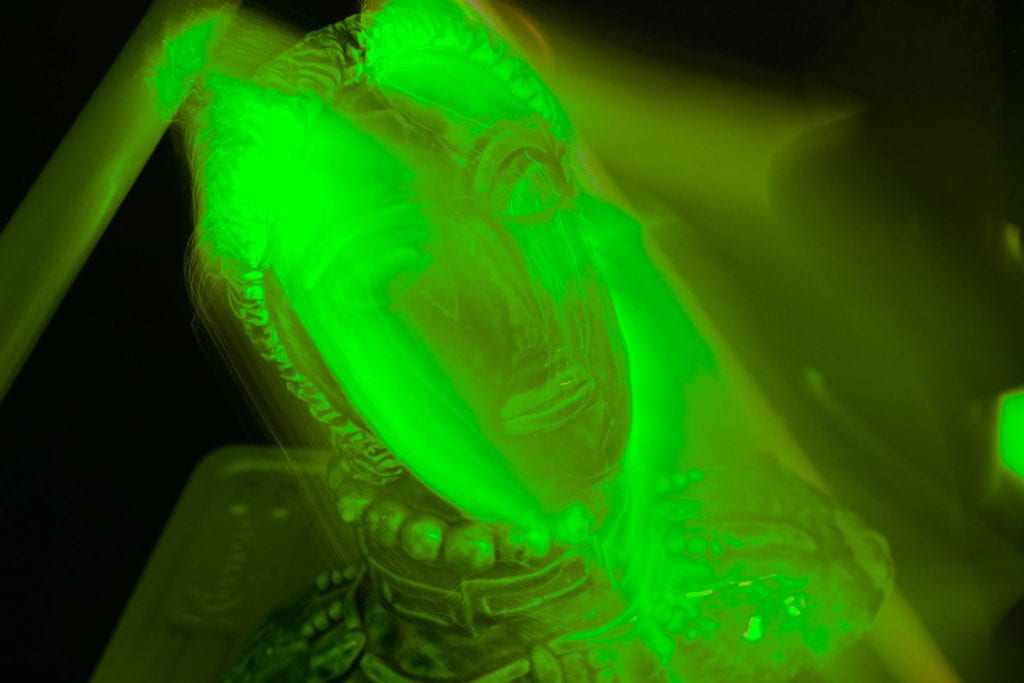
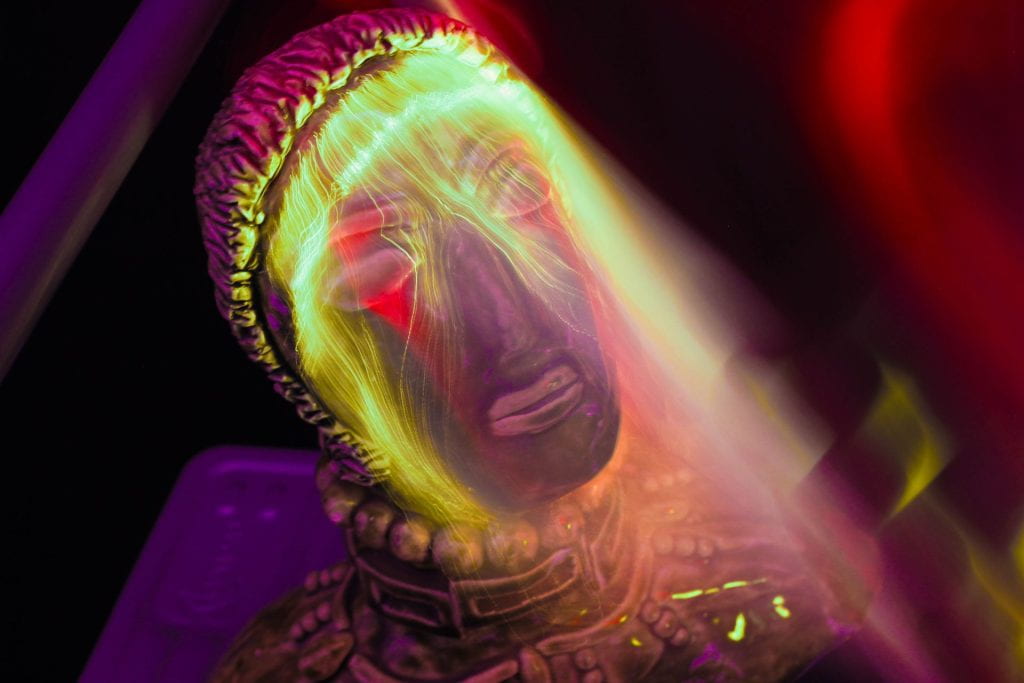


For this photo shot I used objects wich where placed on a stool I used two light bars behind under the stool and then used a fibre optic play toy too swipe across the object which created a very cool and uniqe photo. I used mutiple different colours and I edited them by increasing the saturation, vibrance, clarity and contrast with a couple I also changed the exposure. The camera setting that I used were between 2 and 4 sec at f/ 8.0, with an ISO of 400 and I used a 50mm lens. Which created some very good photos
Freezing Time.
For this project we will be taken photos with a very fast shutter speed which will allow us to capture the time and it acts like a freeze frame meaning we can freeze the photo.
Below is some photos from Dr Harold Edgerton, Dr. Harold Edgerton (1903–1990), known as “Papa Flash,” was an MIT professor and his use of stroboscopic photography. He revolutionise the high-speed imaging, capturing iconic moments like a bullet through an apple and the card trick. His work unveiled dynamic, invisible phenomena and contributed to science, industry, and underwater exploration, collaborating with Jacques Cousteau. Edgerton also developed underwater cameras and sonar, aiding deep-sea discoveries. A renowned educator, he received the National Medal of Science in 1973.


Another famous Photographer who specialised in Fast Shutter Speed photography is Martin Waugh who captures the beauty of motion in a single moment. Because of the way that he uses high-speed photography, he freezes the split-second when water droplets collide, forming incredible shapes like crowns, columns, and abstract figures. His images are bursting with color and light, transforming something as simple as a droplet into a work of art. What makes his work so captivating is the way it reveals the unseen beauty of everyday motion, something we’d never notice with the naked eye. It’s not just photography—it’s a mix of creativity, science, and a deep appreciation for the tiny details of life. Waugh’s art invites us to pause and marvel at the fleeting moments that make up our world. Some of his work is shown below.


I really like this style of work because of how different it is and you would never be able to see this with your naked eye. I like the way that he uses colours on the water which will gives a fascinating photo. I also like the photo because of the ripple effect the water makes coming from the original drop.
Liquid Drop
Shoot using the style of Martin Waugh liquid drop technique in which I used a fast shutter speed to created a freeze frame effect on the water bouncing up from the cup. On these photos below I colour graded them to give them this effect.
Water.


Describe what has happened in your image. Explain how you used the exposure triangle to freeze the action while ensuring the exposure was correct
– Shutter speed – what value did you set your exposure time to?
– Aperture – what did you set the aperture size to?
– ISO – What did you set the sensor sensitivity to?


Milk.